What Line Boring Actually Involves
Line boring exists to fix a specific problem: two or more bores that are supposed to share a single common axis — engine block main bores, gearbox housing bores, or a pair of pillow block seats — have drifted out of alignment with each other. It might come from wear over years of operation, from a housing that's cracked and been welded, or from a bearing that spun in its bore and enlarged it unevenly. Whatever the cause, the fix isn't replacing one bore, it's re-cutting all of them along a single true axis again.
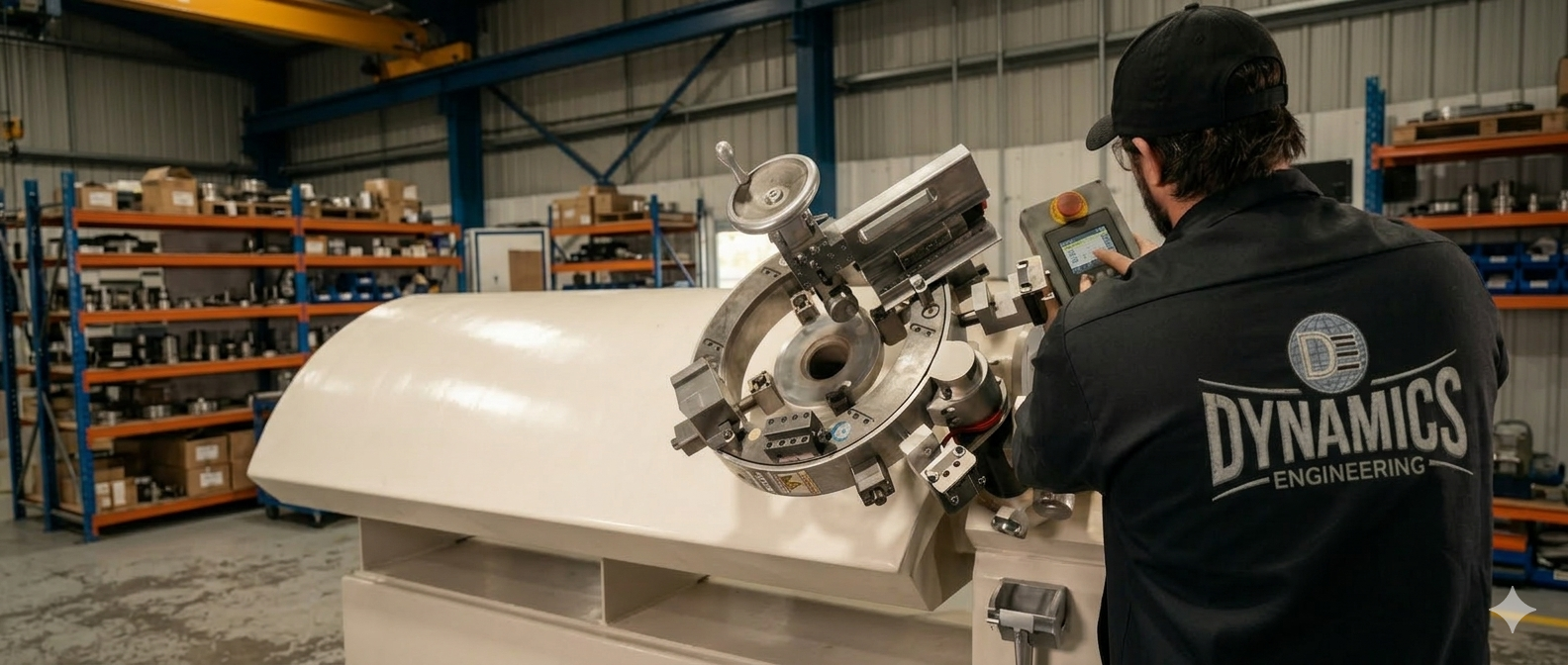
Doing this on-site means bringing a boring bar and support rig to the equipment itself, rather than sending the housing to a shop. For anything bolted into a structure — an engine block in a genset, a gearbox mounted to a foundation, bearing housings on a long line shaft — that saves the entire disassembly and reassembly sequence a shop repair would need.
In-situ line boring holds the same accuracy a shop boring machine would, because the reference for "true" is the bar itself, set up and aligned to the axis the bores are supposed to share — not the housing being loaded into a fixed machine.
What We Bore, and to What Tolerance
Line boring work generally falls into a few recurring applications:
- Engine block main bores — realigning worn or damaged main bearing bores to a single common axis.
- Gearbox and pump housings — correcting bore wear or repairing a bore that's been built up after damage.
- Pillow block and bearing housing bores — restoring alignment across multiple bearing supports on a common shaft line.
- Bushing bores on heavy equipment — re-boring pin or bushing locations on excavators, presses, and similar structural equipment.
We hold concentricity and alignment tolerances in line with the OEM specification where one's available, and machine to what the mating shaft or bearing actually requires when it isn't. Boring diameters and housing sizes are assessed per job — send us the housing type and bore size and we'll confirm scope.
Why Plants Choose Line Boring Over Housing Replacement
Once a bore is worn or misaligned, the alternative to boring it true again is usually replacing the whole housing — an engine block, a gearbox casing, a bearing pedestal. That's a far bigger cost than re-boring, and it comes with its own lead time if the part isn't readily available.
Working directly at the installation also avoids a problem shop repairs can introduce: once a large housing is removed from its foundation, getting it bolted back down in exactly the same position takes its own alignment work. Boring it in place sidesteps that step entirely.
Where This Matters Most
This work earns its keep fastest on equipment where the housing itself is expensive or slow to replace:
- Diesel and gas engine blocks
- Gearbox and reduction unit housings
- Long shaft line bearing pedestals
- Heavy equipment pin/bushing bores
Our Process for Line Boring
Line boring depends entirely on getting the reference axis right before cutting starts — the sequence below reflects that.
Site Assessment
We measure the existing bore alignment and wear, and confirm the true axis the bores need to share.
Boring Plan
We plan the bar setup, support points, and final bore diameter based on the housing and mating component.
On-Site Boring
The boring bar is set up and aligned to the target axis, and material is removed in controlled passes.
Verification & Report
Final measurements confirm bore alignment and diameter, with an inspection report for your records.
Industries We Serve
Line boring requests tend to come from operators running large engines, gearboxes, or long shaft lines, where housing replacement would mean a far longer shutdown than a re-bore:
Line Boring: Common Questions
What's the difference between line boring and regular boring?
Regular boring corrects a single bore. Line boring specifically aligns two or more bores along one common axis — the point isn't just that each bore is round, it's that they all share the same centerline.
Can you line bore without removing the housing from its foundation?
In most cases, yes. The boring bar is set up and supported directly on or around the installed housing, so it typically doesn't need to come off its mounting.
How do you establish the correct axis if the original one has drifted?
We reference off the mating components — the shaft, the adjacent bores, or the equipment's design geometry — to re-establish what the axis should be, rather than assuming the current position is correct.
Is line boring suitable for a bore that's been welded and built up after damage?
Yes, that's a common scenario — the bore is built up with weld material first, then bored back to the correct diameter and alignment. We can advise on this as part of the site assessment.
What housing types have you worked on?
Engine blocks, gearbox and pump housings, bearing pedestals, and structural pin/bushing bores on heavy equipment. If you're unsure whether your housing is in scope, send us the details and we'll confirm.
Dynamics Engineering provides line boring, bore alignment correction, and portable field machining services for plants across Pune, Maharashtra, and PAN India. If a housing on your equipment needs its bores realigned without a full teardown, get in touch for a site assessment.
Get a Quote for In-Situ Line Boring