What On-Site Slip Ring Machining Actually Involves
Slip rings take a beating that most rotating components never have to deal with. Constant brush contact wears the ring surface unevenly, and over time you get grooving, flat spots, or an out-of-round condition that shows up as sparking, arcing, or excess brush wear. Left alone, that damage tends to accelerate, taking brushes and eventually the rings themselves down with it.
The usual fix involves pulling the rotor out of the generator or motor and sending it to a shop that can true up the rings on a lathe. For a large generator rotor, that's not a quick job. It means uncoupling, rigging, transport, and a return trip before the machine is back together and running.
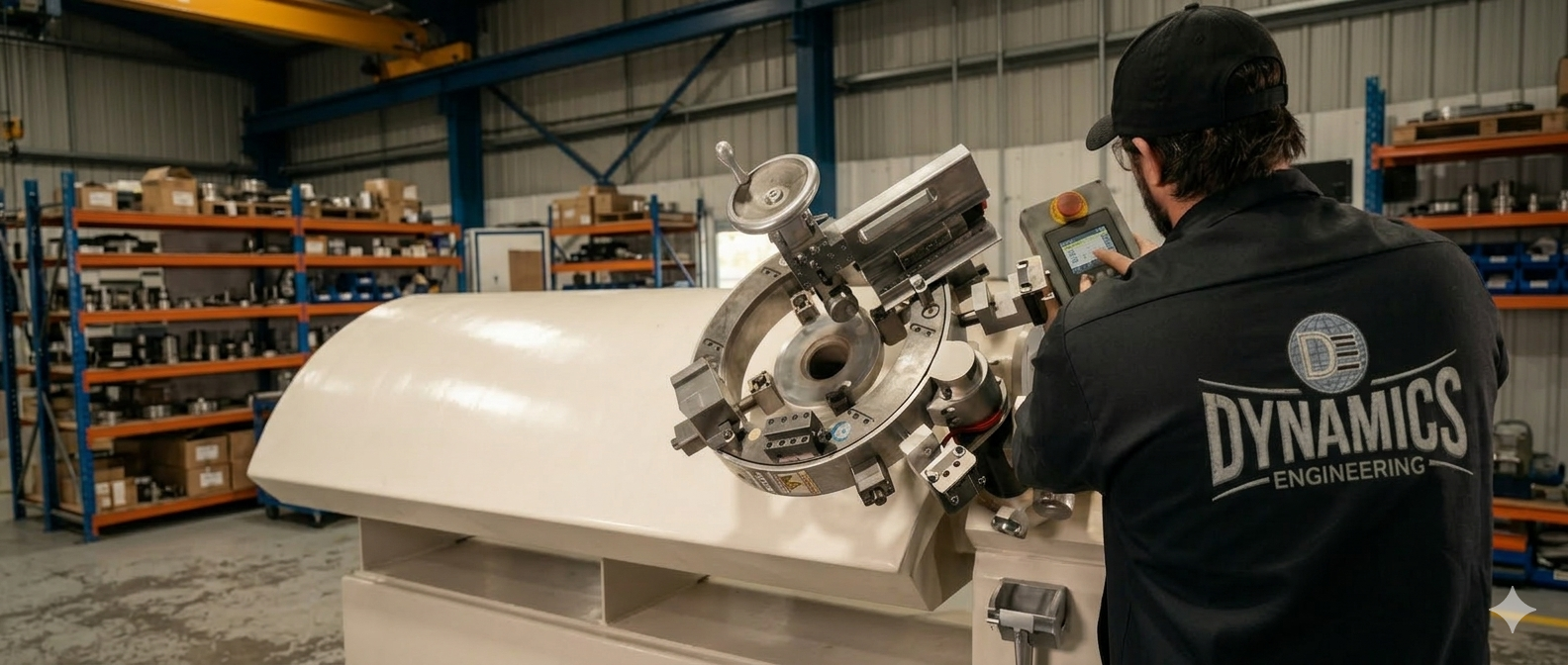
On-site slip ring machining skips the rotor removal. A portable turning or grinding rig is set up directly on the rotor, in place, and the ring surfaces are machined true again without the machine coming apart.
What We Machine, and to What Tolerance
Slip ring machining in-situ generally covers these situations:
- Grooved or scored rings. Turning the surface back to a smooth, uniform diameter after brush wear or arcing damage.
- Out-of-round rings. Correcting ovality that causes brush bounce and uneven contact pressure.
- Flat spots and pitting. Removing localized damage that's affecting contact quality on part of the ring.
- Surface finish restoration. Bringing the ring back to the finish needed for stable, low-wear brush contact.
We work on generator, motor, and wind turbine slip rings across a range of diameters, machining to the tolerance the brush gear and rotor speed actually require rather than a generic finish.
Why Plants Choose On-Site Slip Ring Work Over Rotor Removal
Pulling a generator rotor is a major undertaking on its own, separate from whatever machining follows it. For continuously running equipment, especially in power generation, that downtime often costs more than the repair itself, and it carries its own risk of introducing new issues during reassembly.
Working on the rings while the rotor stays in place also avoids disturbing the rotor's balance and its relationship to the stator, which is exactly the kind of thing you don't want to have to re-verify after a repair that was only ever about the ring surface.
Where This Matters Most
On-site slip ring machining earns its keep fastest on rotors where removal has a real operational cost attached:
- Power generation turbogenerators
- Wound rotor induction motors
- Wind turbine generators
- Large industrial slip ring motors
Our Process for On-Site Slip Ring Machining
Ring work depends on precise setup relative to the rotor's own axis, since any error there shows up immediately as vibration or uneven brush contact.
Site Assessment
We inspect the ring surfaces, measure ovality and wear, and confirm the target diameter and finish.
Machining Plan
We plan the rig setup, referenced to the rotor axis, along with the cutting or grinding sequence.
On-Site Machining
The portable turning or grinding rig is mounted on the rotor, and the ring surface is machined true in controlled passes.
Verification and Report
Final measurements confirm roundness and finish, with an inspection report for your records.
Industries We Serve
Slip ring machining requests come almost entirely from operators running large rotating electrical machines where downtime has a direct production cost:
Slip Ring Machining: Common Questions
How do I know if my slip rings need machining rather than just new brushes?
If you're seeing sparking, excess brush wear, or visible grooving and pitting on the ring surface itself, new brushes alone usually won't fix it. We assess ring condition during the site visit to confirm.
Can this be done without stopping the machine entirely?
The rotor needs to be stationary and isolated for machining, but it doesn't need to be removed from the machine, which is the main time saving compared to a shop repair.
Does on-site machining affect rotor balance?
Machining the ring surface itself has minimal effect on overall rotor balance, since the material removed is small relative to the rotor mass. We monitor this as part of the process on larger rotors.
What if the rings are too worn to machine back to size?
If wear has gone beyond what a re-machining pass can correct, ring replacement or build-up welding followed by machining may be needed. We advise on this during the assessment.
Do you also work on collector rings, not just slip rings?
Yes, collector ring machining follows the same principles and is a service we provide alongside slip ring work.
Dynamics Engineering provides on-site slip ring machining, in-situ ring turning and grinding, and portable field machining services for power and industrial plants across Pune, Maharashtra, and PAN India. If your generator or motor slip rings need restoring without rotor removal, get in touch for a site assessment.
Quote for On-Site Slip Ring Machining