What Machinery Reconditioning and Modification Actually Involves
Not every piece of worn or aging equipment is a candidate for replacement. A lot of the time, the structure is sound, the core design still does the job, and what's actually needed is bringing worn components back to working tolerance, or modifying the machine to handle a change in process, capacity, or material that it wasn't originally set up for. Forging presses are a good example. The frame and drive can easily outlast several generations of tooling and wear parts, provided those parts are properly reconditioned along the way.
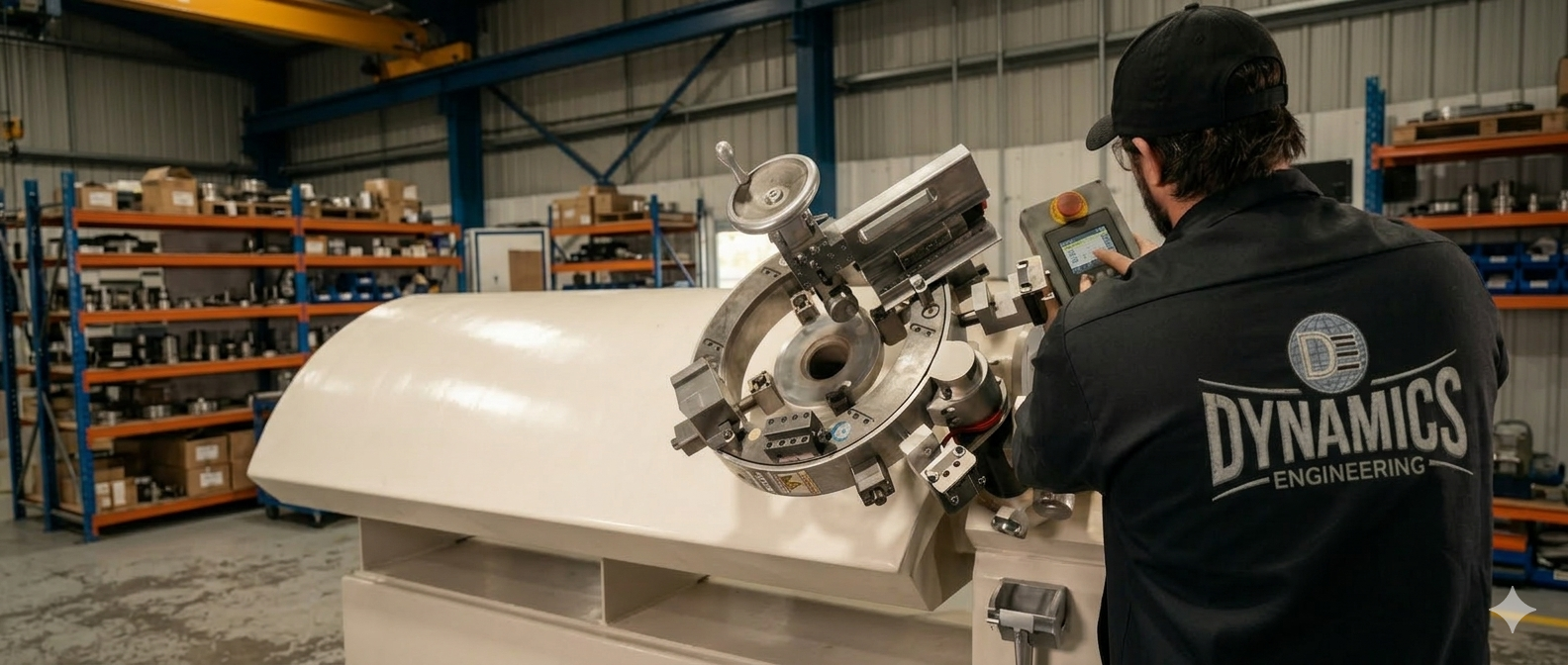
Reconditioning covers the machining, fitting, and correction work needed to bring worn surfaces, bearings, guides, and structural interfaces back to a condition that supports reliable operation. Modification goes a step further, changing part of the machine's configuration, capacity, or function to meet a new requirement, without starting over with a new machine entirely.
Both are usually done on site, since the equipment involved, presses, rolling mills, large machine tools, is rarely practical to move for this kind of work.
What We Recondition and Modify
Reconditioning and modification work spans a fairly broad range, but the recurring categories are:
- Guide and slide surfaces. Restoring flatness and clearance on wear surfaces that have opened up over years of operation.
- Bearing and bushing interfaces. Re-machining housings and shafts to correct fit and reduce play in critical joints.
- Structural and frame repair. Correcting wear or damage on load-bearing surfaces and interfaces.
- Capacity and configuration modification. Adapting equipment to a new material size, process requirement, or production change.
We assess each machine on its own condition and requirement, and the scope of work is defined after a proper inspection, not assumed in advance from the equipment type alone.
Why Plants Choose Reconditioning Over Full Replacement
Replacing a large machine, a press, a rolling mill, a heavy machine tool, is a major capital decision with a long lead time attached. Reconditioning gives operators a middle path when the core structure is still sound, restoring performance without that scale of investment or the production gap a full replacement would create.
Doing the work on site also means the machine doesn't need to be dismantled and shipped, which for equipment of this size is often a bigger logistical challenge than the reconditioning work itself.
Where This Matters Most
Reconditioning and modification earn their keep fastest on equipment with a sound structure and years of useful life left:
- Forging and stamping presses
- Rolling mills and mill stands
- Large machine tools
- Heavy fabrication equipment
Our Process for Machinery Reconditioning and Modification
Because reconditioning scope varies so much by machine, the assessment stage carries more weight here than on a single, well-defined repair.
Condition Assessment
We inspect the machine thoroughly, identifying worn, damaged, or outdated components and interfaces.
Scope and Plan
We define the reconditioning or modification scope, sequence, and equipment setup needed to complete it on site.
On-Site Execution
Machining, fitting, and correction work is carried out in place, following the agreed scope and sequence.
Verification and Handover
The machine is measured and tested against the required tolerances, with a completion report for your records.
Industries We Serve
Reconditioning and modification requests come from operators of large, capital-intensive equipment where replacement isn't the first or most practical option:
Machinery Reconditioning: Common Questions
How do I know if my equipment is a good candidate for reconditioning rather than replacement?
The main factor is the condition of the core structure, frame, and drive train. If those are sound and it's wear parts or interfaces that have degraded, reconditioning usually makes sense. We assess this honestly during the site visit rather than defaulting to a repair recommendation.
Can you modify equipment to handle a different product size or process?
Yes, configuration and capacity modification is part of this service, adapting existing equipment to a changed production requirement rather than requiring new equipment entirely.
Does reconditioning include electrical and control system work?
Our core focus is mechanical reconditioning, machining, fitting, and structural correction. Where control or electrical upgrades are also needed, we coordinate scope with the relevant specialists as part of the project.
How long does a typical reconditioning project take?
This varies significantly based on the scope, from a few days for a focused repair to several weeks for a major overhaul. We provide a timeline once the assessment and scope are complete.
What types of machines have you reconditioned?
Forging presses, rolling mills, large machine tools, and heavy fabrication equipment. If you're unsure whether your equipment falls within scope, send us the details and we will confirm.
Dynamics Engineering provides on-site machinery reconditioning, in-situ modification, and portable field machining services for heavy industry across Pune, Maharashtra, and PAN India. If a machine on your floor needs restoring or adapting rather than replacing, get in touch for a site assessment.
Quote for Machinery Reconditioning