What On-Site Keyway Machining Actually Involves
A keyway does one job. It locks a key into a shaft so torque transfers cleanly to whatever's mounted on it, a coupling, a pulley, a gear. When that keyway wears, usually from repeated micro-movement between the key and its slot, the fit loosens, and you start getting fretting, backlash, or in bad cases a sheared key. Once that happens, the shaft itself is often still fine. It's the keyway that needs correcting.
The traditional answer is pulling the shaft and taking it to a shop with a keyway broacher or slotting machine. On a large shaft coupled to a motor, gearbox, or turbine, that's the same disassembly and transport problem you'd face with any other shaft repair, just to fix what's often a narrow, localized slot.
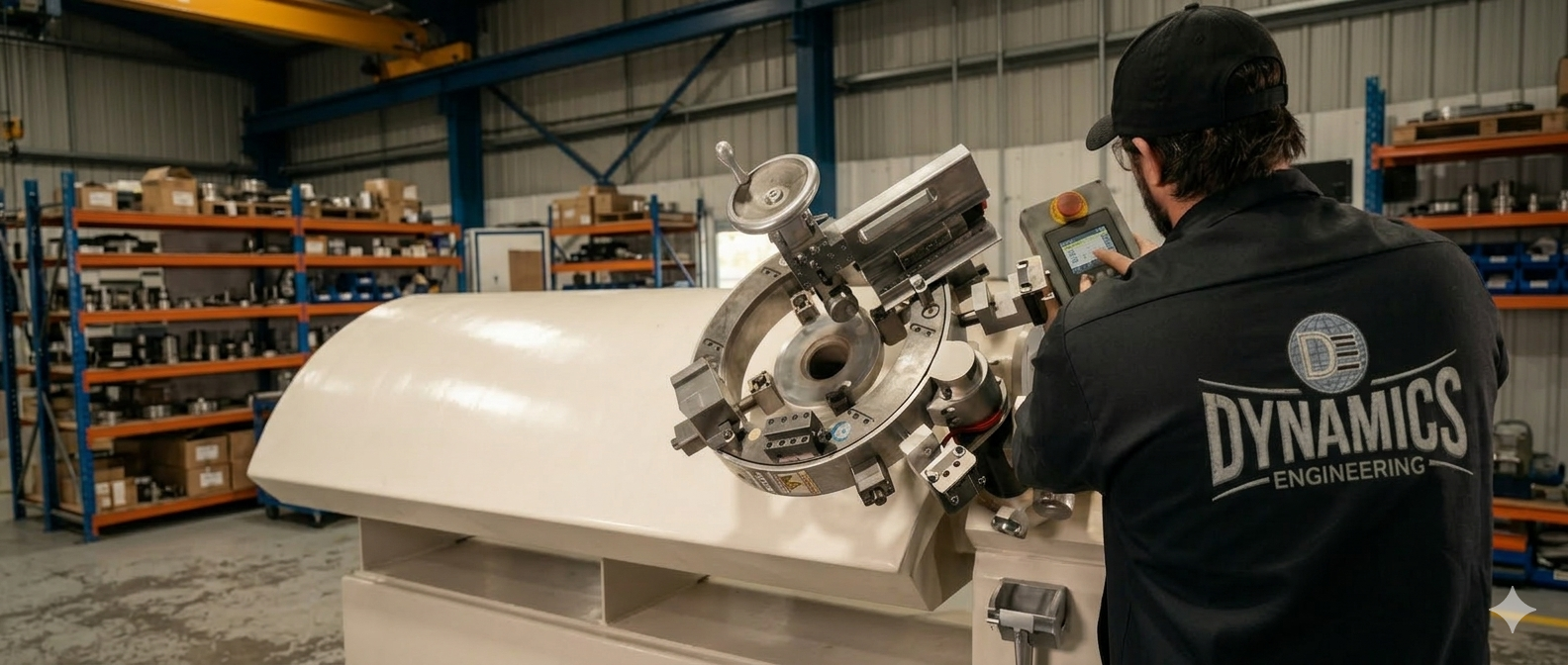
On-site keyway machining cuts or re-cuts the keyway directly on the installed shaft, using portable keyway milling equipment set up and referenced against the shaft itself. The shaft stays where it is, and only the keyway is touched.
What We Machine, and to What Tolerance
Keyway work in-situ generally falls into these categories:
- Worn keyway correction. Widening a fretted or worn keyway to the next standard size, paired with an oversized key.
- New keyway cutting. Machining a fresh keyway on a shaft that didn't originally have one, for a new coupling or fitting.
- Keyway realignment. Correcting a keyway that was cut slightly off the shaft's true axis during an earlier repair.
- Depth and width correction. Restoring the correct key seat depth where wear has changed the fit.
We work to standard keyway dimension tables where the shaft size and application call for it, and to a measured, functional fit where the original specification isn't available.
Why Plants Choose On-Site Keyway Work Over Shaft Removal
A keyway is a small feature on a shaft that's often anything but small to remove. Once you're pulling a coupled shaft out of its bearings just to fix a slot a few centimetres long, the repair has stopped being about the keyway and become a full shaft removal job, with all the crane time and reassembly work that comes with it.
Machining the keyway in place also means the shaft's relationship to its bearings and coupling is never disturbed. There's no realignment step afterward, because nothing else on the shaft moved.
Where This Matters Most
On-site keyway machining earns its keep fastest on shafts where removal is a disproportionate amount of work for the repair:
- Motor and gearbox output shafts
- Coupled turbine and pump shafts
- Long line shafts with multiple couplings
- Heavy industrial drive shafts
Our Process for On-Site Keyway Machining
A keyway that's slightly off center or off axis can be as much of a problem as one that's worn, so getting the reference right matters as much as the cutting itself.
Site Assessment
We inspect the existing keyway, measure wear or damage, and confirm the target width, depth, and length.
Machining Plan
We plan the equipment setup and reference points needed to keep the keyway true to the shaft axis.
On-Site Machining
The portable keyway mill is mounted and aligned to the shaft, and the keyway is cut in controlled passes.
Verification and Report
Final measurements confirm width, depth, and alignment, with an inspection report for your records.
Industries We Serve
Keyway machining requests usually come from plants running coupled rotating equipment, where a worn key seat has started causing backlash or vibration:
Keyway Machining: Common Questions
How do you know if a keyway needs machining rather than just a new key?
If the slot itself has worn wider or deeper than spec, a new standard key won't fit properly no matter how well it's made. We measure the keyway during the site visit to confirm whether it's the shaft or the key that needs attention.
Can you cut a keyway on a shaft that never had one?
Yes, this comes up when equipment is being retrofitted with a new coupling or fitting. We machine a new keyway to the correct size for the application.
Does the shaft need to be uncoupled to machine the keyway?
Often the coupling or fitting over the keyway needs to be removed for access, but the shaft itself typically stays in its bearings throughout.
What happens if the keyway was cut off-center in a previous repair?
We reference the shaft's true axis independently and correct the keyway position, rather than machining relative to the existing, incorrect slot.
What shaft sizes can you cut keyways on?
From small motor shafts up to large industrial drive shafts. Send us the shaft diameter and keyway dimensions and we will confirm scope.
Dynamics Engineering provides on-site keyway machining, in-situ key seat correction, and portable field machining services for plants across Pune, Maharashtra, and PAN India. If a shaft on your equipment has a worn or damaged keyway, get in touch for a site assessment.
Quote for On-Site Keyway Machining