What On-Site Slip Ring Grinding Actually Involves
Turning corrects a slip ring that's badly worn, grooved, or out of round. Grinding is a finer step, used when the ring's basic geometry is fine but the surface finish itself has degraded to the point where brush contact is no longer stable. A ring can be perfectly round and still cause arcing or excess brush wear if the finish has roughened from years of contact, minor pitting, or oxidation.
On-site slip ring grinding uses a portable grinding head, mounted and referenced against the rotor in place, to bring the ring surface back to the fine finish that stable, low-wear brush contact depends on. It's a lighter-touch process than turning, removing far less material while correcting exactly the surface condition that's causing the problem.
This is often the right call either on its own, for rings that just need refinishing, or as a final step after a turning operation, to bring the surface from a machined finish to the smoother one brushes actually run best against.
What We Grind, and to What Finish
On-site grinding work on slip and collector rings typically addresses:
- Surface finish restoration. Removing light oxidation, glazing, or minor pitting to restore a stable contact surface.
- Post-turning finishing. Grinding a freshly turned ring down to the fine finish required for brush contact, beyond what turning alone achieves.
- Micro-roughness correction. Correcting a surface that's technically round but has developed a texture that's causing brush chatter or noise.
- Collector ring refinishing. The same process applied to collector rings on wind turbine and large generator rotors.
We grind to the surface finish specification the brush gear manufacturer or OEM calls for, measured and verified before we consider the job complete.
Why Plants Choose On-Site Grinding Over a Full Overhaul
When a slip ring's problem is finish rather than geometry, sending the rotor out for a full overhaul is more work than the fault actually calls for. Grinding it in place addresses the specific issue causing arcing or wear, without the time and cost of a rotor removal that isn't really necessary.
It also means the fix can often be scheduled around a shorter outage window than a full turning job would need, since less material is being removed and the process itself takes less time on the rotor.
Where This Matters Most
On-site grinding earns its keep fastest where the ring geometry is sound but contact quality has degraded:
- Generators showing early-stage arcing
- Rotors after a recent turning operation
- Wind turbine collector rings
- Motors with elevated brush wear rates
Our Process for On-Site Slip Ring Grinding
Grinding work depends on a stable, well-referenced setup, since the goal is a consistent finish across the entire ring surface.
Site Assessment
We inspect the ring surface and brush wear pattern, and confirm whether grinding alone will resolve the issue.
Grinding Plan
We plan the grinding head setup, wheel selection, and target finish based on the brush gear specification.
On-Site Grinding
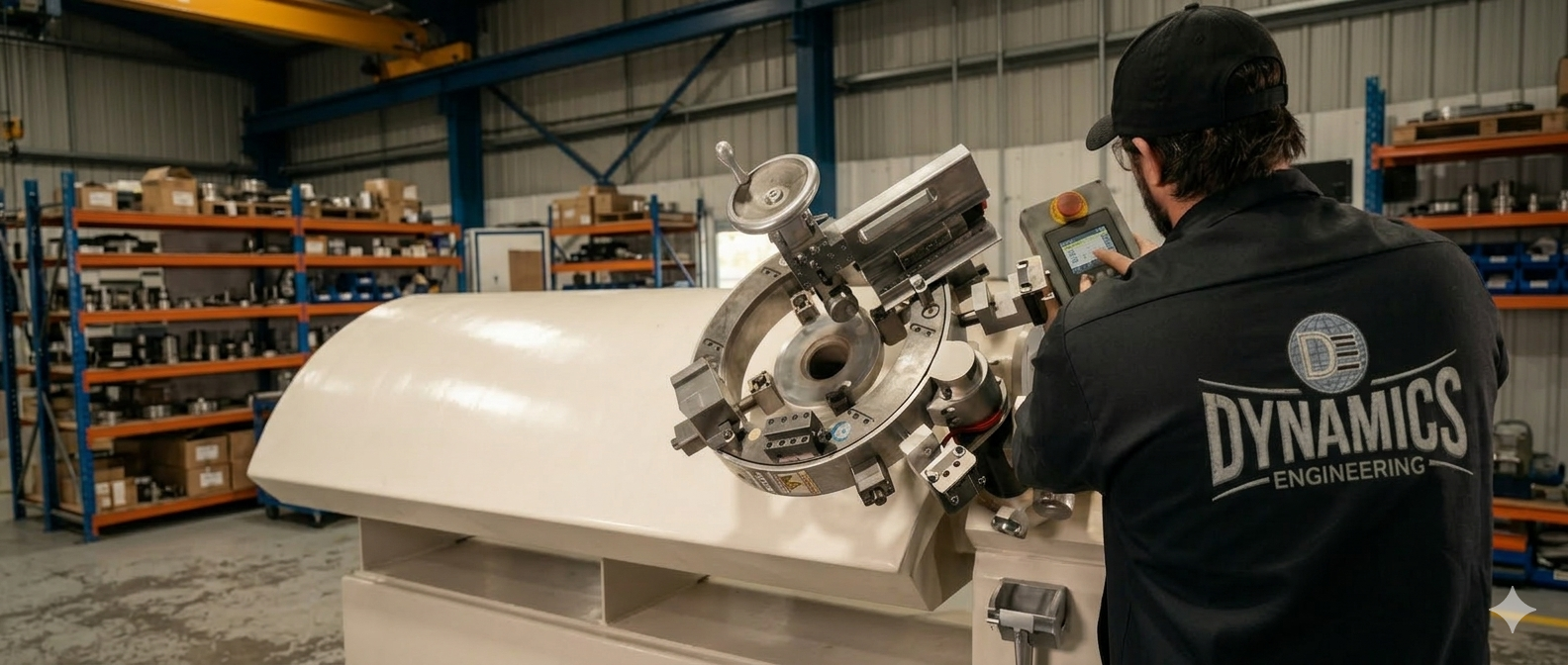
The portable grinding rig is mounted on the rotor, and the ring surface is finished in controlled passes.
Verification and Report
Final measurements confirm surface finish and roundness, with an inspection report for your records.
Industries We Serve
Slip ring grinding requests come mainly from operators of large rotating electrical machines who are managing brush wear and contact quality as part of routine maintenance:
Slip Ring Grinding: Common Questions
How is grinding different from slip ring machining or turning?
Turning corrects geometry, removing enough material to fix ovality, grooving, or wear. Grinding is a lighter, finer process focused on surface finish, and removes much less material overall.
Do I need grinding, turning, or both?
That depends on the ring's condition. If the geometry is sound and the issue is surface finish, grinding alone is usually enough. If there's significant wear or ovality, turning is needed first, often followed by a grinding pass.
How long does an on-site grinding job usually take?
Grinding is generally faster than a full turning job, since less material is being removed. Exact timing depends on ring size and condition, and we confirm this during the site assessment.
Will grinding reduce brush wear afterward?
Yes, a properly finished contact surface reduces friction and irregular contact, which typically extends brush life compared to a rough or glazed ring surface.
Can you grind collector rings on wind turbine generators?
Yes, the same process applies to collector rings, and it's a common request from wind operators managing brush and ring maintenance on their turbines.
Dynamics Engineering provides on-site slip ring grinding, in-situ collector ring finishing, and portable field machining services for power and industrial plants across Pune, Maharashtra, and PAN India. If brush wear or arcing points to a ring finish problem, get in touch for a site assessment.
Quote for On-Site Slip Ring Grinding