What On-Site Core Drilling Actually Involves
Core drilling is what you reach for when a hole needs to go through something structural, and it needs to be clean, round, and exactly where the design says it should be. Concrete foundations, steel base frames, thick fabricated plates, all of these resist a standard drill, and a poorly placed or ragged hole in a load-bearing structure isn't something you can easily fix afterward.
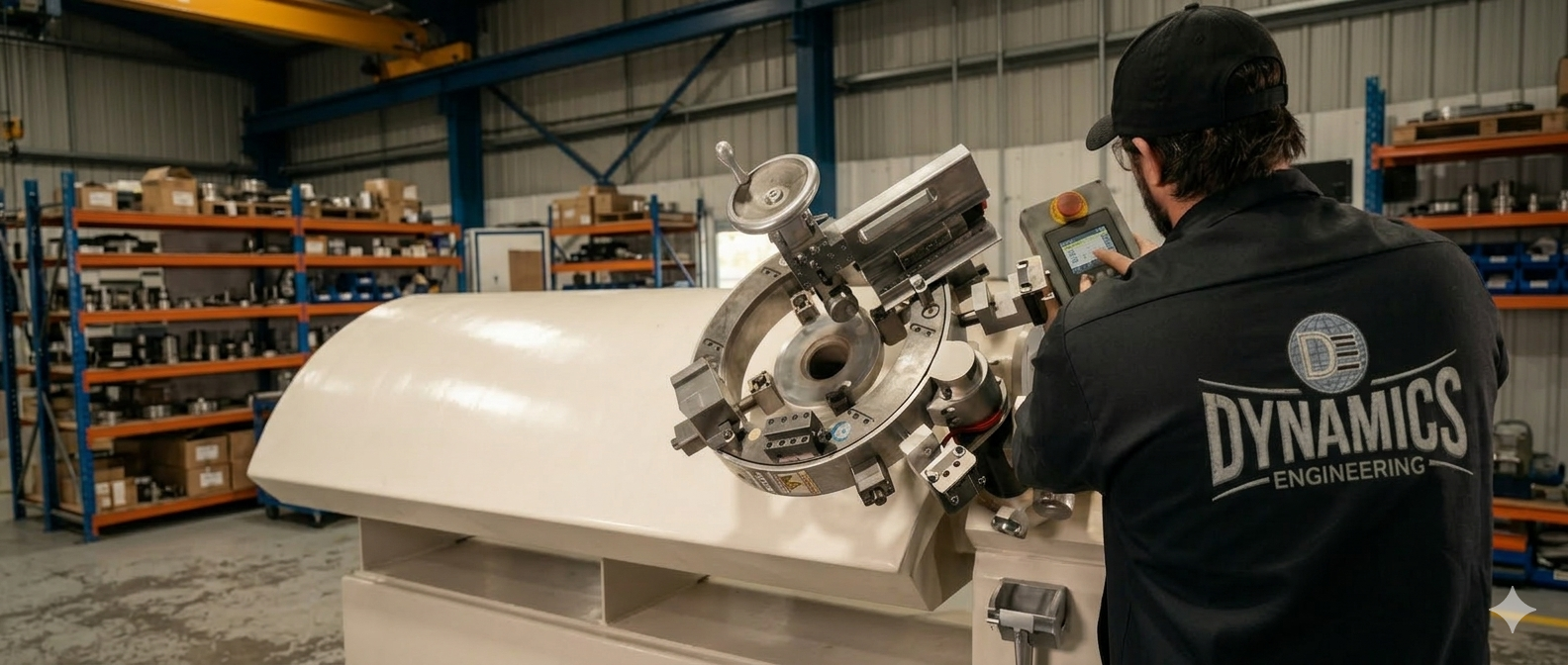
On-site core drilling uses a diamond or carbide core bit mounted on a rig that's set up and anchored directly at the location. It cuts a precise, round hole straight through the material, whether that's for a new anchor bolt pattern, a pipe penetration, a cable route, or an inspection port.
Because the rig is referenced directly against the structure, the hole comes out square and on location the first time, without the guesswork of trying to mark and drill freehand through something this thick.
What We Drill, and to What Tolerance
Core drilling work covers a fairly wide range of structural and equipment applications:
- Concrete foundations. Precise holes for new anchor bolts, equipment mounts, or utility penetrations.
- Steel plates and structures. Clean, round holes through thick steel where a standard drill isn't practical.
- Pipe and cable penetrations. Openings sized and positioned for new piping, conduit, or cable routing through walls or decks.
- Inspection and access ports. Holes cut for internal inspection or access where none currently exists.
We size and position holes to the drawing or layout provided, and where structural considerations are involved, coordinate positioning with your engineering team to avoid rebar, embedded services, or load-bearing elements.
Why Plants Choose Core Drilling Over Alternative Methods
The obvious alternative to core drilling is breaking through a structure with impact tools, which is faster in theory but leaves a rough, oversized opening that often needs patching or reinforcement afterward. That trade rarely makes sense when the hole needs to hold a specific size or take an anchor bolt at a specific position.
Core drilling is also quieter and produces far less vibration than impact methods, which matters when the work is happening near sensitive equipment, occupied areas, or structures where vibration itself could cause damage.
Where This Matters Most
Core drilling earns its keep fastest where precision and structural integrity both matter:
- Equipment foundation modifications
- New pipe or cable penetrations
- Anchor bolt pattern additions
- Inspection port installation
Our Process for On-Site Core Drilling
Positioning is the part of core drilling that can't be corrected after the fact, so it gets the most attention before any cutting starts.
Site Assessment
We confirm hole size, position, and depth against the drawing, and check for embedded services or reinforcement.
Drilling Plan
We plan rig anchoring, bit selection, and sequence based on the material and structural considerations involved.
On-Site Drilling
The core drilling rig is anchored and aligned to the marked position, and the hole is cut through in controlled passes.
Verification and Report
Final measurements confirm hole size, position, and squareness, with a completion report for your records.
Industries We Serve
Core drilling requests come from plants and sites needing structural penetrations for new equipment, piping, or cabling without disturbing what's already in place:
Core Drilling: Common Questions
Can you core drill through reinforced concrete without cutting the rebar?
We scan for rebar and embedded services before drilling and position the hole to avoid them wherever the layout allows. If rebar can't be avoided entirely, we coordinate with your engineering team on the right approach.
What's the largest hole diameter you can core drill?
This depends on the material and rig used, ranging from small diagnostic holes up to large penetrations for piping or equipment access. Send us the required diameter and material and we will confirm scope.
Does core drilling create a lot of dust or debris?
Wet core drilling, which we use for most concrete work, controls dust significantly compared to dry methods, and also extends bit life and improves cut quality.
Can you drill at an angle rather than straight through?
Yes, angled core drilling is possible when the rig can be securely anchored at the required angle. This is common for penetrations that need to align with piping or conduit routing.
How do you avoid drilling into embedded cables or pipework?
We use scanning equipment to detect embedded services before drilling begins, and cross-check against any available as-built drawings.
Dynamics Engineering provides on-site core drilling, in-situ structural penetrations, and portable field machining services for plants across Pune, Maharashtra, and PAN India. If your structure or equipment needs a precise hole cut without disturbance, get in touch for a site assessment.
Quote for On-Site Core Drilling