What On-Site Drilling and Tapping Actually Involves
Sometimes the fix a piece of equipment needs isn't machining an existing surface, it's adding something new. A mounting hole for a bracket that wasn't there originally, a stripped thread that needs to be re-tapped to the next size up, or a new pattern of holes for a modification. On a small part that's straightforward. On a large fabricated structure, a pressure vessel, or a machine base that's bolted into a foundation, it stops being straightforward the moment you consider moving it just to use a fixed drill press.
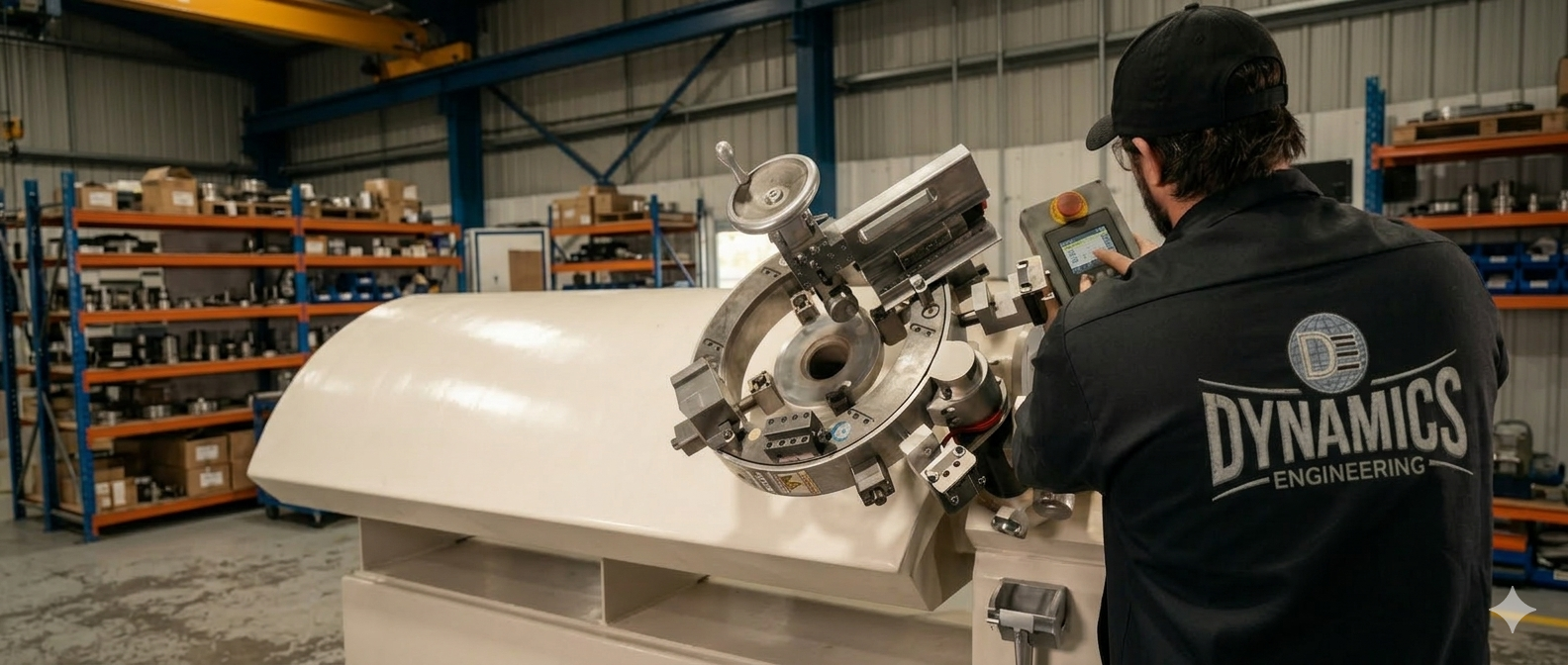
On-site drilling and tapping uses portable, magnetically mounted or clamp-mounted drilling units that go directly to the component. The unit is set up square and on location, and the hole or thread is cut in place, at the same accuracy you'd expect from a stationary machine.
This covers both new holes and repair work. A stripped or damaged thread often doesn't need a new part, it needs re-tapping to a larger size or fitting with a thread insert, and that's work that can be done in-situ just as easily as drilling a fresh hole.
What We Drill and Tap, and to What Tolerance
On-site drilling and tapping work typically covers the following:
- New mounting holes. Drilling accurately positioned holes for brackets, supports, or new attachments on installed equipment.
- Thread repair. Re-tapping stripped or damaged threads to the next standard size, or fitting a thread insert to restore the original size.
- Bolt pattern modifications. Adding or repositioning holes when equipment is being retrofitted or upgraded.
- Pilot and clearance holes. Precision holes for dowels, pins, or alignment features that need to hold a tight position tolerance.
We work across steel, cast iron, stainless, and most structural materials, matching hole position, diameter, and thread class to the drawing where one's available, or to the mating component's actual requirement where it isn't.
Why Plants Choose On-Site Drilling Over Removing the Part
For a lot of drilling and tapping jobs, the part itself would be simple to machine on a fixed drill press. The problem is getting it there. A base frame, a vessel wall, or a structural member is often permanently installed, and the only realistic way to use a stationary drill would be cutting the part free, which usually isn't an option at all.
On-site work also avoids the risk of introducing a new alignment error. When you're adding a bolt pattern that needs to match an existing part exactly, drilling it in place, referenced directly against that part, is more reliable than trying to reproduce the same relationship after moving something.
Where This Matters Most
On-site drilling and tapping earns its keep fastest where the part in question can't reasonably be moved:
- Pressure vessels and tanks
- Large fabricated structures
- Installed machine base frames
- Piping and structural steelwork
Our Process for On-Site Drilling and Tapping
Getting the hole position right the first time matters more here than almost any other on-site job, since a misplaced hole usually can't be undone.
Site Assessment
We confirm hole positions, sizes, and thread requirements against the drawing or the mating component.
Setup Plan
We plan the mounting method, drill positioning, and sequence to avoid distortion or misalignment.
On-Site Drilling and Tapping
The portable unit is set up square to the surface, and holes or threads are cut to the required specification.
Verification and Report
Final measurements confirm position and thread fit, and we hand over an inspection report for your records.
Industries We Serve
On-site drilling and tapping requests come mostly from plants working with large fixed equipment or structures that can't be relocated for a simple hole or thread repair:
On-Site Drilling and Tapping: Common Questions
Can you drill accurately positioned holes on a curved or irregular surface?
Yes, the portable units we use can be set up and referenced on curved vessel walls, pipe sections, and irregular structural surfaces, not just flat plates.
What happens if a bolt hole thread is stripped?
Depending on the damage, we either re-tap the hole to the next standard size or fit a thread insert to restore the original bolt size. We assess which approach is right during the site visit.
Do you need access to both sides of the material?
Not always. Many jobs can be done from one side depending on the drilling method and material thickness. We confirm access requirements as part of the initial assessment.
Can you match an existing bolt pattern exactly?
Yes, this is one of the more common reasons for on-site drilling. We reference directly off the existing pattern or mating component so the new holes align correctly.
What materials and thicknesses can you work with?
Steel, cast iron, stainless, and most structural materials, across a wide range of thicknesses. Send us the material and application and we will confirm scope.
Dynamics Engineering provides on-site drilling, in-situ tapping, and portable field machining services for plants across Pune, Maharashtra, and PAN India. If your equipment needs a new hole, thread repair, or bolt pattern added without relocation, get in touch for a site assessment.
Quote for On-Site Drilling and Tapping