What Flange Facing Actually Involves
A flange only does its job if the face is flat, smooth, and square to the pipe or vessel it's bolted to. Corrosion, gasket damage, over-torquing, or just years of service can leave that face pitted, scored, or slightly out of flat — and once that happens, no amount of gasket or torque will reliably seal it. The usual sign is a joint that weeps, or one that needs re-torquing more often than it should.
The conventional fix is cutting the flange out of the line and sending it to a shop for facing — which on process piping means a section of pipe out of service, welds to cut and re-make, and a hydro-test before it goes back into operation. For a flange that's part of a live pipeline, a pressure vessel nozzle, or a large rotating equipment casing, that's a disproportionate amount of work for what's often a surface-level repair.
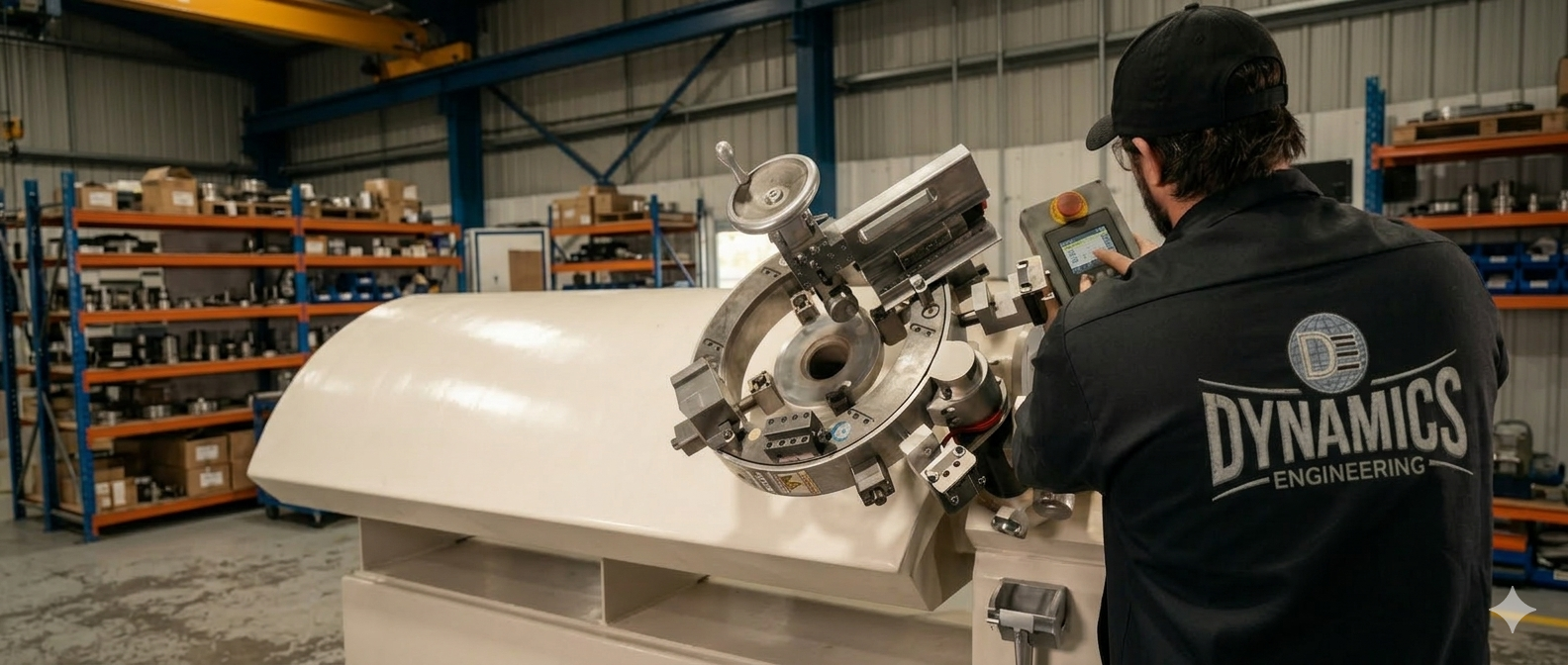
Flange facing done directly on the pipe or vessel skips the cutout. A portable facing machine clamps onto the flange itself, and the sealing face is re-cut flat and square in place, without touching the weld or the rest of the line.
What We Face, and to What Tolerance
Flange facing covers a specific, well-defined repair, but it shows up across a wide range of equipment:
- Flatness — removing warp, pitting, or gasket damage so the sealing face sits truly flat again.
- Perpendicularity — correcting the face angle relative to the pipe or bore axis, so the joint closes evenly under bolt load.
- Surface finish — restoring the correct finish (smooth or serrated, depending on the gasket type) for a reliable seal.
- Bolt hole cleanup — light correction of bolt hole condition where wear or corrosion has affected fit, alongside the facing work.
We work on flange sizes from small instrument connections up to large pipeline and vessel flanges, following ASME/ANSI or equivalent flange standards where applicable, or matching the mating flange's actual condition where standards aren't the deciding factor.
Why Plants Choose In-Situ Facing Over Cutting the Flange Out
Cutting a flange out of a live line isn't just downtime for that joint — it's downtime for the welds, the hydro-test, and often a permit process before the line can be reopened. For a leaking or damaged flange face, that's a lot of process to solve what's frequently a surface problem, not a structural one.
Facing it in place also avoids introducing new weld-related stress or alignment issues into the line. The flange stays exactly where it was welded, and only the sealing face itself is corrected.
Where This Matters Most
In-situ facing earns its keep fastest where cutting the line out means real process or compliance cost:
- Live process piping flanges
- Pressure vessel and tank nozzles
- Pump and compressor casing flanges
- Large-diameter pipeline flanges
Our Process for Flange Facing
Flange facing depends on holding the face true to the bore axis, not just flat in isolation — the sequence below reflects that.
Site Assessment
We inspect the flange face, measure flatness and squareness, and confirm the extent of the correction needed.
Facing Plan
We plan the machine setup, mounting method, and target finish based on the flange type and gasket requirement.
On-Site Facing
The portable facing machine is mounted directly to the flange, and the face is machined true in controlled passes.
Verification & Report
Final measurements confirm flatness, perpendicularity, and finish, with an inspection report for your records.
Industries We Serve
Flange facing requests are common wherever live piping, pressure vessels, or rotating equipment casings need a sealing surface restored without shutting the whole line down:
Flange Facing: Common Questions
Can a leaking flange always be fixed by facing, or does it sometimes need replacement?
Not always. If the flange has deep pitting, cracking, or damage beyond what a re-face can correct, replacement is the right call. We assess the face condition on site before recommending facing over replacement.
Do you need to depressurize and drain the line first?
Yes — the line needs to be isolated, depressurized, and the flange broken open before facing, the same as any flange work. What's avoided is cutting the flange itself out of the line.
Can you match a serrated or smooth finish depending on the gasket type?
Yes, the facing finish is set to match whatever the gasket requires — spiral wound, ring joint, or flat gasket types each expect a different surface finish, and we machine to that.
What flange sizes can you work with?
From small instrument and valve flanges up to large pipeline and vessel flanges. Send us the flange size and rating and we'll confirm scope quickly.
Does on-site facing meet the same standards as shop machining?
Yes — we machine to ASME/ANSI or equivalent flange face standards where applicable, and the finished face is measured and documented the same way a shop repair would be.
Dynamics Engineering provides flange facing, on-site sealing surface repair, and portable field machining services for plants across Pune, Maharashtra, and PAN India. If a flange on your line or vessel needs its face restored without a cutout, get in touch for a site assessment.
Quote for In-Situ Flange Facing