Engine Block Restoration at a Glance
Industry
Power Generation
Location
laal Kuan
Service
On-Site Line Boring
Duration
[9 days on site]
Main Bearing Bores Worn Out of Alignment
Years of running load had left the engine block’s main bearing bores worn and no longer sharing a single true axis. The misalignment was putting uneven load on the main bearings, and the operator was seeing early signs of it in vibration readings and faster-than-expected bearing wear on inspection.
The block itself was structurally sound, this wasn’t a cracked or fatigued casting, it was wear in the bores themselves. But a worn, misaligned bore is still enough to force replacement of an otherwise serviceable block if it can’t be corrected, and a new block of this size carries a long lead time along with the cost.
Discuss a Similar JobBearing Load Risk
Bores that no longer share a common axis force the main bearings to carry load unevenly, which accelerates wear on bearings that would otherwise last far longer.
Block Replacement Cost
A new engine block of this size is a major cost, and often carries a lead time measured in months, not weeks, depending on availability.
Downtime of a Conventional Rebuild
Sending the block to a shop for boring would mean lifting it out of the frame entirely, a job that carries its own rigging, transport, and reinstallation time.
Risk of Doing Nothing
Left uncorrected, the misalignment would have continued accelerating bearing wear until a bearing failure forced an unplanned shutdown.
Line Boring the Block Back to a True Axis, In Place
Our team measured the existing bore alignment across all main bearing positions before touching anything, establishing exactly how far each bore had drifted from where the crankshaft’s true centerline needed to sit. That measurement became the reference for the boring bar setup, rather than assuming the correction needed was the same at every bore.
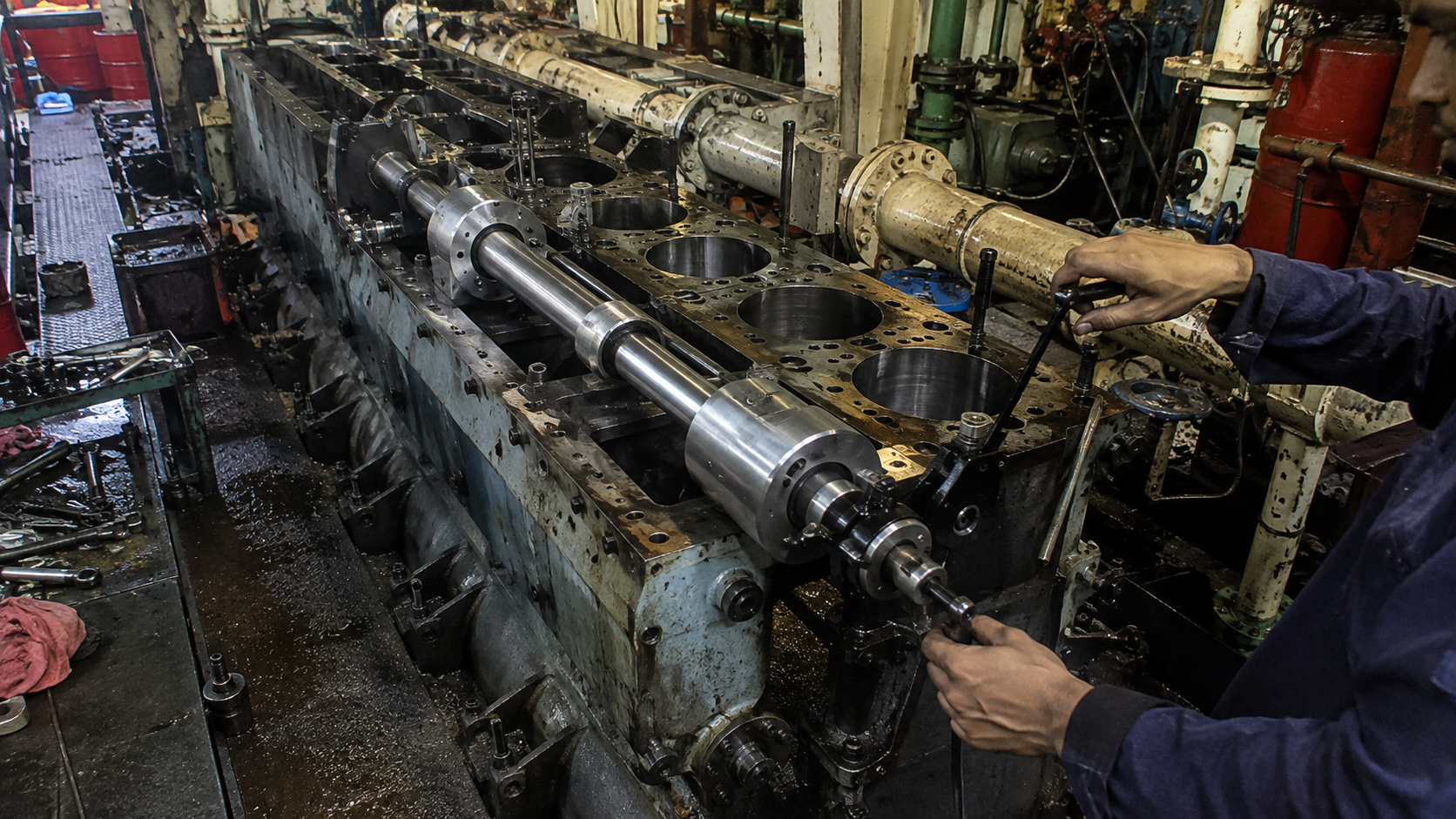
A boring bar was then mounted and aligned to the target axis, supported directly on the block, and each bore was re-cut in sequence to restore a single common centerline across the full length of the block.
Bore Alignment Survey
Every main bearing bore was measured against the block’s true axis before any cutting, mapping exactly where each one had drifted.
Boring Bar Setup
The bar was mounted and aligned to the target centerline, referenced against the block itself rather than an assumed starting position.
Sequential Boring
Each bore was re-cut in sequence along the bar’s length, so every bearing position ended up sharing the same true axis.
Block Stayed in the Frame
The block remained mounted in the engine frame throughout, avoiding the lifting, transport, and reinstallation a shop repair would have required.
Step-by-Step: On-Site Line Boring for Engine Block Restoration
The same sequence we follow on any line boring job was used here, scaled to the length and bore count of this particular block.
Site Assessment
Measured every main bearing bore against the block’s true axis and confirmed the extent of misalignment before planning the job.
Boring Plan
Set the target axis and bore diameter, and planned the bar support points along the block’s full length.
On-Site Boring
Bored each main bearing position in sequence, holding the bar to the target centerline throughout.
Verification
Re-measured all bores to confirm true-axis alignment and diameter before the block was signed off.
Block Restored to Service Without Replacement
All main bearing bores were brought back to a single true axis, correcting the uneven bearing load that had been driving accelerated wear. The block was returned to service holding the tolerance it needed without the cost, lead time, or downtime a full replacement would have required.
Because the boring was carried out with the block still in the frame, the operator avoided the extended removal-and-reinstallation window a shop-based rebore would have needed, keeping the outage close to a routine maintenance window rather than a major overhaul.
What This Prevented
- The cost and lead time of a new engine block
- Continued uneven main bearing wear
- An unplanned shutdown from eventual bearing failure
- Extended downtime for block removal and reinstallation
Equipment & Techniques Involved
Common Questions
How do you know a block can be line bored rather than needing replacement?
It comes down to whether the wear is confined to the bores themselves, with the surrounding casting still structurally sound. If the block is cracked, fatigued, or damaged beyond the bore surfaces, replacement is usually the right call. We assess this during the site visit before recommending boring.
Does the block need to be removed from the frame at all?
In most cases, no. The boring bar is set up and supported directly on the block in its installed position, which is one of the main reasons this approach avoids the downtime a shop rebore would need.
How do you establish the correct target axis if the block has drifted significantly?
We reference off the block’s design geometry and the crankshaft’s actual centerline requirement, rather than assuming the current position of any single bore is correct.
What block sizes and engine types have you worked on?
Diesel generator, marine, and industrial stationary engine blocks across a range of sizes. Send us the engine make, model, and bore count and we will confirm scope.
Explore the Service Behind This Project
On-Site Line Boring
Realigning worn or misaligned bores, including engine block main bores, back to a single true axis without removing the housing.
View Line Boring ServicesDealing With a Worn or Misaligned Engine Block?
If your engine block’s main bearing bores have drifted out of alignment, our engineers can assess whether it’s a candidate for on-site line boring before you consider replacement.
Talk to an Engineer